Case study★ Personal projectLate 2023 – Early 2024

ClarityBand.

UX Research · UX/UI Design · Product Design · Physical & Digital Design · Prototyping

In flow · band stays quiet
Drifting · gentle nudge
Type
Personal
Role
Sole designer
Timeline
2023 – 2024
Methods
Desk research · focus group · affinity mapping · competitive analysis · EEG experiment · pilot test
00Overview

Sense. Understand. Act.

ClarityBandreadsbrainactivitythroughasoftEEGheadband,turnsitintoasimplebrainstate,andrespondswiththerightkindofresetattherightmoment.HereisthefinalsystembeforethestoryofhowIgotthere.

01
Sense
A lightweight headband with dry electrodes streams EEG to the phone over Bluetooth.
02
Understand
A personal baseline turns α, β and θ activity into four states: flow, drifting, running low and tense.
03
Act
The band itself nudges you, then the app offers a reset matched to your state. In flow, it stays silent.
Drag to rotate
Drag to explore the final headband in 3D, or explode it to see each part.
Drag to rotate
The wearable: a ring-shaped ear hook spreads pressure; soft silicone keeps electrodes against the skin.
The app: a neuron-field visual that changes with your brain state, in real time.
−17%
Task time
35 → 29 min with the band
+2 pts
Accuracy
88% → 90%
6 → 9
Self-rated focus
out of 10
+8%
Slower when distracted
EEG study, same task difficulty
Pilot averages from 6 participants, each completing the same learning task with and without the device. Directional, not statistically significant: a larger study is planned.
01Background

Inspiration

Comic: I sit at my desk writing homework, phone face down with Do Not Disturb on. Soon after, I'm curled up in my chair scrolling my phone, thinking '5 more mins…'.
Me pulling at my hair, eyes squeezed shut, regretting the lost time
01
I was ready to focus.
Phone down. Do Not Disturb on. No distractions in sight.
02
Just five more minutes.
One video became another. I didn't even notice the time passing.
03
Where did the time go?
I only realized I'd lost focus after the time was already gone.
THE QUESTION

WhatifIcouldnoticemyattentiondriftingbeforeIlosttrackoftime?

02Research

Why Focus Needs a Different Approach

I explored what disrupts attention and how existing focus-support strategies address these challenges, looking for opportunities beyond simply blocking distractions.

2.1Finding 01

Sustained Focus Is Short, and It Isn't the Same for Everyone

Before blaming myself, I wanted to know whether short focus was a personal problem. Secondary research showed it is common, and that how long people can stay focused shifts with where they live and how old they are.

Evidence · Attention span by country
Minutes per focus session< 1010–2020–3030–4545 +
47 sec
Average time people stay on one screen before switching, down from about 2.5 minutes in 2004.
Gloria Mark, UC Irvine · Attention Span (2023)
≈ 41%
Of a 16-hour waking day is spent online, at the world average of 6h 38m.
Calculated from DataReportal 2025
8 sec
The viral ‘goldfish’ attention span. I couldn’t trace it to a primary study, so I left it out.
Research practice: check the source
RankingAvg. 29 min
01United Kingdom55 min
02Canada50 min
03United States45 min
04India20 min
05Japan18 min
06Mexico15 min
07Brazil15 min
08China12 min
Average minutes of sustained focus per session.
Evidence · Sustained attention by age
Elderly 60+
≤ 45 min
Adults 19–59
60 min
Teenagers 13–18
45 min
Children 6–12
20 min
Preschoolers 3–5
5 min

Sustained attention varies across the lifespan, with differences in performance between children, young adults, and older adults.

Design implication
Focus support should accommodate individual attention patterns rather than assume a universal standard for everyone.
Design direction: Personalized & flexible feedback
2.2Finding 02

Distraction Comes from More Than One Source

Once I knew short focus was common, I wanted to hear how it plays out day to day: what pulls people away, whether they notice it happening, and what they do to get back on track.

Evidence · Focus group

Participants discussed different causes of distraction and described moments when their attention shifted away from tasks. We worked through four questions and clustered the answers on a shared board.

Focus group affinity board: four question clusters (when focus is hardest, what distracts, how people notice they've lost focus, how they regain it) plus a research synthesis cluster, each surrounded by sticky notes.
Synthesis

The discussion revealed three patterns:

1. MULTIPLE SOURCES OF DISTRACTION
Participants described digital, environmental, cognitive, and personal factors that pulled their attention away from tasks.
2. DELAYED AWARENESS
Some participants described realizing they had lost focus only after rereading content, losing track of time, or forgetting their original task.
3. SELF-INITIATED RECOVERY
Participants described using strategies such as removing their phones, taking breaks, or setting timers to regain concentration.
Attentiondrift
Design implication
Rather than trying to eliminate every distraction, the design should help users recognize when their attention drifts across different situations.
Design direction: Attention awareness & monitoring
2.3Finding 03

Existing Solutions Address Only Parts of the Problem

Findings 01 and 02 gave me four things a focus tool would need to handle: different personal rhythms, more than one source of distraction, drift that is noticed too late, and recovery that runs on willpower. I used them as a lens to look at what people already rely on.

Evidence · Competitive analysis

I compared four representative products and the most common self-discipline advice against those four needs. I chose one well-known physical product for each of the four ways people try to manage focus: blocking noise (Bose QuietComfort), masking the environment (LectroFan), planning ahead (Full Focus Planner) and sensing attention (Foci). I left out phone apps, since the phone is itself one of the biggest distractions; screen-time tools are covered under "Common advice".

BLOCK
Bose QuietComfort
Noise-cancelling headphones
Bose QuietComfort
PLAN
The Full Focus Planner
Productivity planner
The Full Focus Planner
MASK
LectroFan
White noise machine
LectroFan
SENSE
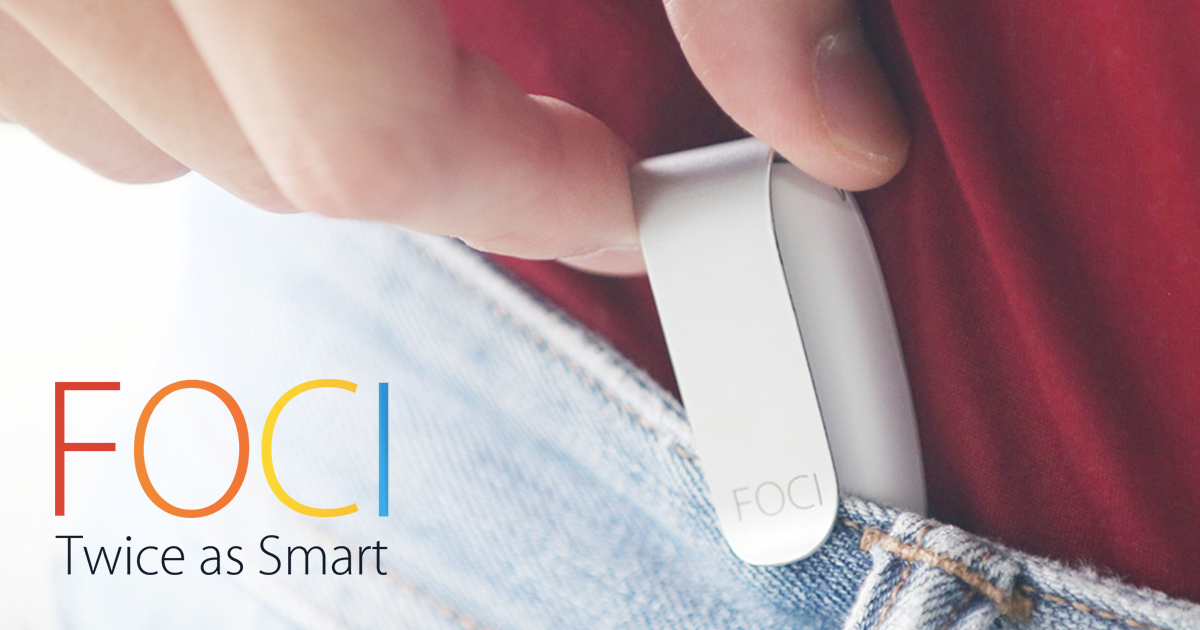
Foci
Wearable with real-time biofeedback
Foci
Product images © Bose, Full Focus, Adaptive Sound Technologies and Tinylogics (Foci), shown for comparison.
What a focus tool needsBose QCFull Focus PlannerLectroFanFociCommon advice
Adapts to the individual
From Finding 01
Covers more than one source
From Finding 02
Notices drift in the moment
From Finding 02
Works without willpower
From Finding 02
Yes Partly NoCommon advice: meditation, screen-time limits, Pomodoro, removing distractions
Synthesis

Mapping the same options by when they act and how much effort they ask for shows where the gap is.

OPPORTUNITYNotices drift in the moment,without extra effort↑ In the momentBefore / after drift ↓← Needs effortEffortless →Bose QCLectroFanFull Focus PlannerCommon adviceFoci

Most options either block a single source of distraction or rely on willpower set up in advance. Foci is the only one that responds in the moment, but it depends on the phone and takes effort to learn. Nothing yet notices drift as it happens while staying effortless to live with.

Design implication
Focus support should fit naturally into daily routines, offering actionable feedback without becoming another task users have to manage.
Design direction: Low-friction & actionable support
Design opportunity

From Managing Distractions to Supporting Attention

People experience attention differently, distractions come from multiple sources, and existing strategies often require ongoing effort.

How might we
How might we help people become more aware of their attention and respond to distractions without adding another burden to their workflow?
03Experiment

Can a brain signal show distraction?

The research helped me understand how people experience distraction. Next, I compared a distraction-free and a distracted version of the same kind of task, to explore how task performance and EEG readings change when attention is pulled away.

+Theoretical basis: why EEG?· Kaushik et al., 2022

Research has shown that EEG activity is significantly related to attention levels. In focused states, the brain, especially the frontal cortex, shows more high-frequency activity (beta and gamma waves), indicating intense cognitive processing. In unfocused or relaxed states, alpha activity increases, particularly in the occipital and parietal regions, reflecting a relaxed or resting brain.

Kaushik, P., Moye, A., Vugt, M. van and Roy, P.P. (2022). Decoding the cognitive states of attention and distraction in a real-life setting using EEG. Scientific Reports, 12(1). doi:10.1038/s41598-022-24417-w

3.1

Setup

Without distractions
Task
Reading comprehension and math problem-solving
Environment
A quiet room, with no interruptions
Recorded
EEG as the baseline, answers and completion time
Reading comprehension
Math problem-solving
With distractions
Task
The same task types, at matched difficulty
Added
Simulated social-media notifications, pop-up ads, nearby conversation and a countdown timer
Recorded
EEG, answers and completion time
Messagesnow
are you coming tonight??
Social2m
jules and 4 others liked your post
Group chat5m
12 new messages
×
FLASH SALE · ENDS SOON
65" 4K TV
40% OFF
Shop now →
🔊 Nearby conversation
"…wait, did you see that?"
TIME LEFT
00:03:15
MEASURESEEG band power (α, β, γ)Task completion timeAnswer accuracy
PROCEDURE · SAME PARTICIPANTS, BOTH CONDITIONS
1 Fit the EEG cap and let participants settle in
CALM2 Distraction-free tasks, recorded as the baseline
DISTR.3 Matched tasks with distractions added
4 Short questionnaire on how each session felt
3.2

What changed

EEG power spectrum · both conditions
αβγ3020100-10-2001020304050607080Frequency (Hz)Power (dB)
UndisturbedDisturbed
Band power, disturbed vs. undisturbed
α Alpha 8–12 Hz↑ Higher
β Beta 13–30 Hz↓ Lower
γ Gamma 30+ Hz↓ Lower
Scalp topography, undisturbed
Undisturbed
Scalp topography, disturbed
Disturbed
Average answer accuracy
Undisturbed
89%
Disturbed
76%
Share of questions answered correctly.
Time to complete the same tasks
Undisturbed
100
Disturbed
108
Relative time, undisturbed = 100. Distracted took 8% longer at identical difficulty.
With distractions, alpha power rose while beta and gamma fell, and in the same sessions participants answered fewer questions correctly and took longer. The EEG shift and the drop in performance moved together.
These are EEG band readings from the device, not a direct measure of how focused someone feels.
Detecting a change was only the beginning.

The readings did shift when distractions appeared, which made me think about how to use them. But a change in the signal doesn't tell the system when to step in. That raised the questions the next part had to answer:

Q1
Should every dip in the reading trigger a reminder?
Q2
How long should a change last before it counts as drift?
Q3
How do we keep the feedback itself from becoming a distraction?
04Key Decisions

From a signal to the right moment.

The experiment showed that the readings move. It didn't say when a device should act on them. Each question below started with an obvious answer that broke down in a real moment of work.

4.1

Q1

Should every dip in the reading trigger a reminder?

My first instinct was simple: when the reading crosses a threshold, buzz.

But a dip isn't always distraction. Picture someone stuck on a hard paragraph, staring out the window to think. The signal drops, the band buzzes, and it interrupts the exact moment of focus it was meant to protect. Baselines also differ from person to person, so one fixed line would nag some users constantly and never notice others.

So a dip only becomes a candidate, measured against the user's own baseline from the first minutes of a session. It's not a trigger yet.

Gives up: catching the very first second of driftKeeps: trust that a cue means something
Rule A · one fixed line5 alertsRule B · your own baseline1 alert
Same signal, two rules. A fixed line mistakes thinking pauses for drift.
Illustrative · simulated signal
4.2

Q2

How long should a change last before it counts as drift?

A fixed delay sounds like the answer, but the focus group pointed somewhere better. Many people already notice and recover on their own. A cue that lands during that recovery takes the credit and adds noise.

So each candidate opens a short window, around 20 seconds in the prototype. If the reading comes back before the window closes, the timer quietly resets. Only a change that holds counts as drift.

Gives up: a few seconds of response timeKeeps: room for self-initiated recovery
short dip20 s windowRecoveredtimer resets, no cueHeld 20 sone gentle pulse
A short dip that recovers stays silent. A sustained one earns a cue.
Illustrative · simulated signal
4.3

Q3

How do we keep the feedback itself from becoming a distraction?

My first version was a nudge that simply said "focus."

But a bare reminder interrupts without helping. Picture someone who has been rereading the same page for a minute. The band buzzes, they realize they drifted, and now they also have to decide what to do about it. The cue adds a decision on top of the distraction.

So every cue comes with one small next step. When sustained low readings trigger a reminder, the product suggests a brief reset, like a short breathing round or a quick stretch, then brings the user back to their task. The interruption gets a clear purpose: notice, reset, resume.

Gives up: a purely silent nudgeKeeps: a clear next step after every cue
Plain reminderNo next stepSustaineddriftBuzz:"Focus"Now what?Back to thesame loopCue + suggestionNotice → reset → resumeSustaineddriftBuzz +suggestionShortresetBack tothe taskbreathing roundor quick stretch
A cue that only says "focus" leaves people stuck. One small next step closes the loop.
Illustrative · simulated signal
4.4

Putting it together

From every dip to one meaningful cue.

Each decision removes a reason to interrupt, until the only cue left is one worth acting on.

BeforeFirst instinctEvery dip triggers an alert.ReadingdropsPhonealertUser checksthe phoneBack on the screen, easier to driftThinking pauses get interrupted tooand the phone becomes the next distraction.AfterProposed logicFiltered twice, then one cue with a next step.Back to quiet monitoringReadingdropsOff yourbaseline?Lasts20 s?Soft pulse +suggestionShortresetYESYESNo · normal for youNo · recovered on its ownbreathing or stretchBack tothe taskNotice → reset → resumeevery cue comes with a next stepProposed interaction logic · timings are prototype values and still need validation.
05Design Direction

Bringing focus support into everyday life.

The feedback logic defines when to step in and how to guide people back. Next, the question became how a wearable and an app could carry that experience together.

01Band
Wearable sensing
A headband quietly reads attention-related EEG signals in the background, and delivers the soft pulse right on the body.
02App · in the moment
Actionable app guidance
When a cue fires, the app pairs it with a short, specific suggestion that helps people reset and return to their task.
03App · over time
Reflection over time
Session records, summaries and progress views help people look back and recognize their own patterns.
06Hardware

A working prototype, built to test the idea.

To test the experience with real people, I built a headband that could be worn through a full work session. I treated it as a design tool, not a product to ship: every hardware choice was judged by what it meant for the person wearing it.

Drag to rotate
Drag to rotate
Drag to rotate, or explode the model to see each part.
6.1

How the signal travels

SENSE
Forehead electrodes + ear-clip reference
Ag/AgCl contacts
READ
EEG module streams raw packets
UART · 57600 baud
CLEAN
Arduino checks sync bytes and checksum
drops corrupted packets
SEND
Bluetooth to phone or computer
HC-series module
USE
Signal quality + attention value
feeds the feedback logic
6.2

Designing for the wearer

SignalA noisy reading would turn into false cues.
Swapped stainless-steel electrodes for Ag/AgCl, which have lower impedance and give a steadier signal.
ConnectionIf it doesn't pair with someone's device, nothing else matters.
Moved from a BLE-only JDY-34 module to an HC-series module that works with more phones and computers.
ComfortPeople need to forget they're wearing it.
Soft medical-grade silicone on the inside, an ergonomic curve, and a ring-shaped ear hook that spreads pressure so the band stays put.
+Technical details

Board headers: P1 EEG electrode, P3 UART serial, P4 power. The Arduino reads packets at 57600 baud, checks the sync bytes and checksum, then extracts signal strength, attention and meditation values. A Velcro band adjusts to different head sizes. View the Arduino code ↗

07App

An app that knows when to step back.

The band handles the moment focus slips. The app supports everything around it: getting started, choosing a reset, and looking back afterwards. Every screen traces back to something the research or the key decisions asked for.

7.1

User flow

One session is a short loop. The only interruption, the cue, waits behind the 20-second rule from Q2. Everything else waits until focus is over.

Calibraterelax...2 min baselinestartCalibrateYour nudgelight buzzgentle pulsesoft chimenever interrupt flownextChoose a nudgePlanwhat are you on?writereadstudy–+25 minstartPlan a sessionFocus72in flow · stays quietendLive focusHow focused?12345feltmeasuredthe gap = the lessonsaveReflectInsightsbest: 9–11am21 minfocus spanbeatsworks for youInsightsFocus beats60 sskipdoneShort resetFocus58drifting?try a resetgoDrift promptdrift lasts 20 sstart a resetback to focussession ends
7.2

Setting up

A short calibration sets your own baseline. Then two choices, and you're focusing.

nudge
Choose a nudge
"Never interrupt flow" is on by default.
plan
Plan a session
Only what you're doing and for how long.
7.3

During focus

Readable at a glance, so the phone can stay face down. Colour and rhythm shift with each state, and the band only steps in after 20 s.

flow
In flow
The screen stays quiet.
drift
Drifting
Offers focus beats.
tired
Running low
Offers a move break.
tense
Tense
Offers box breathing.
7.4

When focus slips

Each cue suggests the reset that fits what's behind the drop. One tap to start, skip anytime.

beats
Attention drifts
Focus beats: gentle 40 Hz tones.
move
Energy runs low
A five-minute move break.
breathe
Stress rises
Box breathing, four seconds a side.
7.5

After the session

Details wait until focus is over.

reflect
Felt vs. measured
The gap teaches people to notice drift sooner.
insights
Insights
Your own patterns, never rankings.
7.6

Visual language

Warm paper tones and one calm blue, so the screen never competes with the task. Violet, orange and pink only appear when the state changes: drifting, running low, or tense. Each one matches its own reset.

Paper
Background
Ink
Text
Focus blue
Actions, flow
Drift violet
Drifting
Tired orange
Running low
Tense pink
Stress rising
AaNewsreaderHeadlines
AaInstrument SansInterface text
AaIBM Plex MonoNumbers, timers
7.7

See it in motion

One session from start to finish: plan, focus, a gentle nudge when attention drifts, a short reset, and the look back afterwards.

08Evaluation

Did it help?

I ran a within-subject pilot: 6 participants each completed the same learning task with and without the device, then rated their focus. Numbers below are group averages.

MeasureWithout deviceWith device
Task time35 min29 min
Accuracy88%90%
Self-rated focus6 / 109 / 10
“I didn’t realize how easily I got distracted until I used this tool. It made me more aware of my own focus habits.”
Pilot participant (1 of 6)
Pilot session photo
8.1

What this does and doesn’t tell us

SUGGESTS
Awareness itself changed behaviour: the biggest shift was in how focused participants felt, which shaped the felt vs. measured reflection in the app.
LIMITATIONS
n = 6 is too small for significance, there was no counterbalancing, and a learning effect is likely on the second run. The numbers show direction, not proof.
09Reflection

What I learned.

Validate assumptions before building on them.
During this project, I realized that a lower “focus score” did not necessarily mean the user needed a reminder. It showed me that even a seemingly reasonable design could be based on my own guesses. In future projects, I would check these ideas through observation, conversations, or testing before developing the design further.
Think about what the user does next.
This project showed me that I could finish designing a feature without fully considering what the user would do next. In future projects, I would walk through the experience from the first action to the user’s goal, look for moments where they have to guess or figure things out on their own, and address those gaps.
Test before polishing.
Working on both the wearable and the app made me realize how many parts of an experience need to work together. In future projects, I would use simple prototypes to check the key interactions before spending time refining the details. This would help me find problems while the design is still easy to change.
9.1

Next steps

Usability testing of the full experience
Validating state-detection accuracy
Longer-term use in everyday life
Refining how nudges feel
Accessibility and inclusive design

Create a free website with Framer, the website builder loved by startups, designers and agencies.